Prepare ways to kill enemies during waves and to hit the final boss repeatedly. Before dividing cards evenly across 3 floors, build 1 core floor that survives and increases its damage each turn.
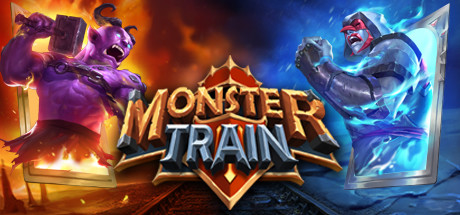
What is Monster Train?
A deckbuilding roguelike fought aboard a train bound for hell. Its defining feature is a battlefield **divided into 3 vertical floors**, with enemies climbing from the bottom. You do not need to defend every floor completely; deliberately giving up a lower floor to concentrate strength upstairs is one of its interesting decisions. Each run also combines 2 clans, or factions, into a deck, with different combinations changing how you fight. It is praised for its tactical depth among games like Slay the Spire, with over 22,000 Steam reviews and an Overwhelmingly Positive rating. However, **Japanese is not officially supported**.
Scope: The original PC game and ordinary Covenant progression, rather than Monster Train 2. Basic setups are explained without The Last Divinity, with Pact Shards covered in a separate final section.
Mechanics checked: October 04, 2026
Prepare ways to kill enemies during waves and to hit the final boss repeatedly. Before dividing cards evenly across 3 floors, build 1 core floor that survives and increases its damage each turn.
14 / 14 items
Check the combat preview before placing units
Floor capacity, front-to-back order, and the timing of enemies moving upward are separate systems. Check who takes the first attack, beyond simply counting how many units fit.
- Check whether your core units and Champion fit together on the same floor. Watch for capacity-changing conditions and upgrades that increase unit size.
- Put a damage-taker in front and damage-dealers behind. Check the combat preview after placement to ensure your core units survive their first battle.
- Low-HP enemies in the back cannot be killed just by attacking the front. Prepare ways to remove them with spells, Sweep, or similar effects.
- Enemies that get through climb to the next floor and eventually damage the Pyre. Check predicted damage and whether upper floors can absorb the leaks.
- Build healing and damage on your core floor before Relentless begins. Saving everything to use at the end may leave too few turns.
How to draw core units early
Not every unit follows the same draw rules. Core units obtained from unit banners and similar sources have priority draw, helping you plan your opening.
Wide tables scroll horizontally.
| What to check | Mechanic and decision | Exceptions and cautions |
|---|---|---|
| Banner Unit | If any remain in the draw pile, at least 1 is drawn with priority during the turn's draw | This does not apply to every unit. Do not assume Imps and Morsels follow the same rule |
| Number of core units | Adding more core units does not guarantee your preferred one appears first | Focusing on 1–2 core units is one example approach. Other systems such as Reform change the composition |
| Champion | Check capacity and cost for placing it on the same floor as the core units | Champion upgrade paths can change its role or size |
| Copies | Consider duplicating an upgraded core unit at a Hellvent | Extra core units change draw order. More copies do not automatically make a setup consistent |
No entries match this table search. Shorten or clear the search to show all entries again.
Choosing merchant upgrade priorities
Choose upgrades by what they improve for your core units, using the combat preview. Do not decide investments by rarity alone.
Wide tables scroll horizontally.
| What the core lacks | Upgrade direction | What to check |
|---|---|---|
| The front unit dies early | HP and access to healing or Regeneration | More turns survived also give back units more attacks |
| The front survives, but the boss remains alive | Attack scaling and Multistrike | Adding attack to multiple strikes applies that increase several times in a single combat |
| Small back enemies survive | Sweep and targeted spells | This is a different role from dealing enough damage to kill a high-HP front unit |
| You do not draw powerful spells often enough | Removing unwanted cards, draw, and Holdover | Adding Holdover does not solve insufficient resources or cards in hand |
| You want to buy Largestone | Recalculate placement including its size increase | After upgrading, the unit may no longer fit on a floor where it previously fit |
| Gold is limited | Focus on the core's weakness and choose your next merchant | Do not exhaust the core's upgrade budget by spreading small upgrades across many starting cards |
No entries match this table search. Shorten or clear the search to show all entries again.
Adding and removing cards, and choosing routes
The map lets you compare upcoming merchants, removal, and duplication opportunities. Do not choose a route solely for its immediate reward.
- Before taking a card reward, decide whether it improves core survival, damage scaling, or backline removal. Skip it if it adds no useful role.
- Once the core is ready, consider removing unused Train Stewards and weak spells. First check that you have replacement front units and enough early fighting strength.
- If Ember remains but your hand runs out, improve draw. If strong cards remain unplayed, improve costs and Ember. Do not choose the same boss reward every time.
- Upgrade the intended target before visiting a Hellvent. Check the whole setup to ensure core copies do not worsen draw order or capacity.
- Read the added enemy effects before enabling a trial. Add it for rewards only when your current backline removal and frontline durability can handle it.
Build a boss-winning setup before Relentless
Relentless repeats combat on the same floor, trading blows until your core units fall. Avoid planning to leave the final boss entirely to the Pyre.
Wide tables scroll horizontally.
| Combat preview state | What is missing | Adjustment |
|---|---|---|
| Only the front unit disappears quickly | The number of boss attacks it can endure | Prepare your clan's options, such as HP, healing, Armor, or damage prevention |
| You survive a long time, but the boss has HP left | Damage scaling each turn | Combine scaling mechanisms such as Rage, added attack, and Multistrike |
| Your core is strong, but wave enemies reach the Pyre | Removal of small back enemies | Use targeted spells or Sweep to remove enemies your core attacks cannot reach |
| Buff spells do not appear when needed at the end | Hand consistency | Reduce unwanted cards and improve cycling through draw, Holdover, and similar methods |
No entries match this table search. Shorten or clear the search to show all entries again.
A concrete core example: stack attack on an Awoken Sweep unit and use healing to keep its front unit alive. Quick and Multistrike are possible additions if available, but do not assume every shop offers them.
Keep Covenant and DLC conditions separate
First make base-game wins consistent, then check newly added conditions each time difficulty rises. A Covenant 25 setup is not the only correct starting answer.
- Covenant adds conditions at each level. Identify whether capacity, starting cards, or enemy durability caused a loss, and adjust the next setup.
- Runs with The Last Divinity enabled have Pact Shards and additional upgrades. Evaluate their benefits alongside the stronger enemies they create.
- The DLC's extra final battle differs from the base game's Seraph fight. Do not assume damage sufficient for the base game clears it in the same way.
- Use this page's opening, placement, and core-upgrade tables as general principles, and check DLC-specific Shard requirements and additional enemy details separately.
Monster Train FAQ

Hyrule Historia

Steam ¥3,000

Switch Pro Controller

Steam Deck OLED
Affiliate links to Amazon Japan. Purchases may earn us a commission at no extra cost to you. Check the retailer for current prices.
Game Music Collection
HORI mini controller for Switch
eShop ¥5000 — Rakuten
Rakuten Points ¥3000
Affiliate links to Rakuten Japan. Listed prices are indicative; check the retailer for current prices.

Steam Deck OLED
See product details and current availability on Amazon Japan.

Steam ¥3,000

VGN Dragonfly F1 Pro
Affiliate links to Amazon Japan. We may earn a commission on purchases. Listed prices are indicative and may change.
This week in the community
Guide videos
Opens YouTube, an external website.
Related games
- → Slay the Spire A deckbuilding roguelike staple
- → Balatro An addictive mix of cards and build crafting
- → Loop Hero A card placement roguelite

Razer DeathAdder V3
See product details and current availability on Amazon Japan.

HHKB Pro HYBRID

Xbox controller

G435 LIGHTSPEED

Alienware ultrawide
Affiliate links to Amazon Japan. We may earn a commission on purchases. Listed prices are indicative and may change.